
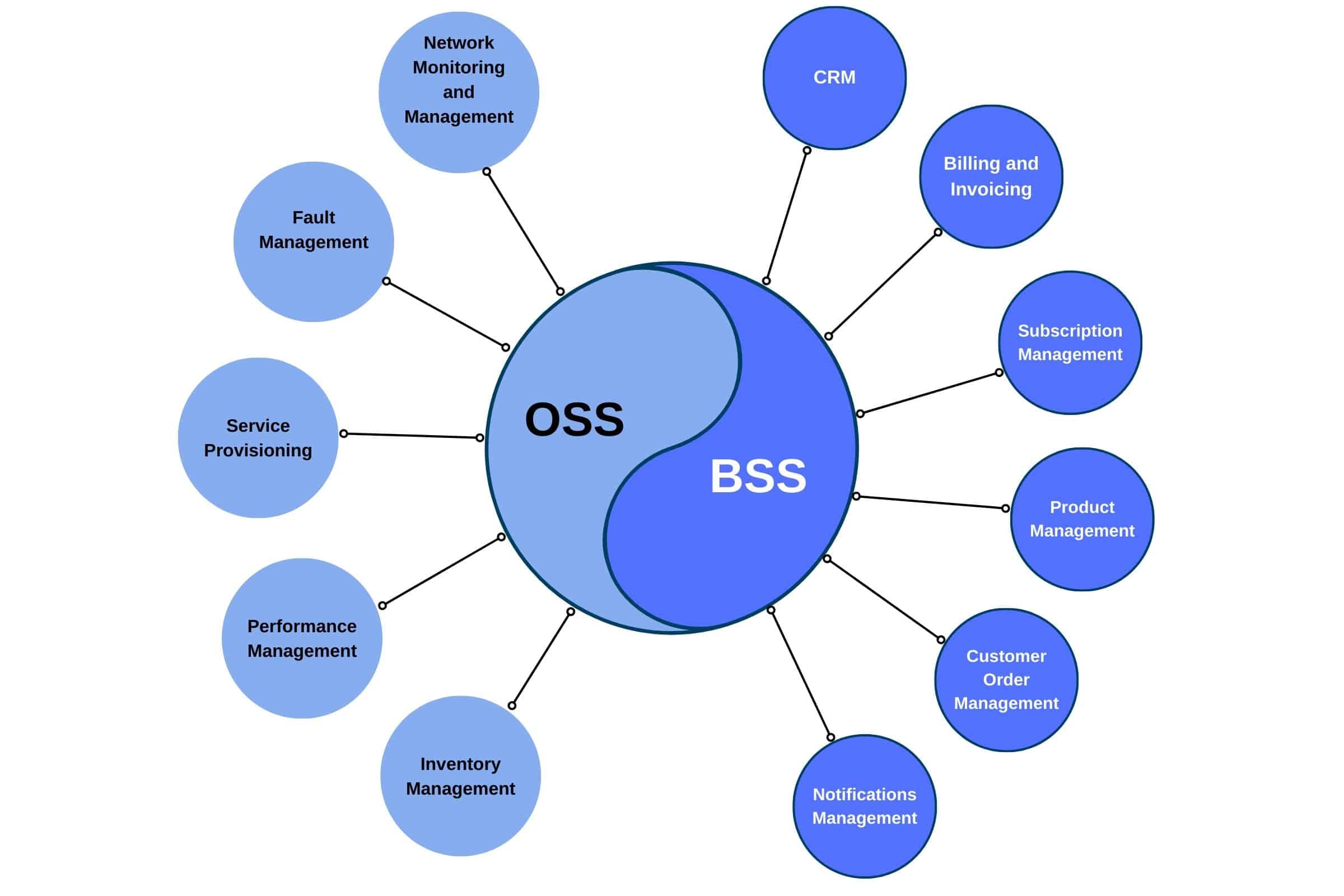
Telecom billing software in 2026 has to do more than produce invoices. Operators are launching converged offers across mobile, broadband, IoT and digital services, pricing on real-time usage rather than flat plans, and expecting new products to go live in weeks. The platform you choose either enables that pace or quietly becomes the bottleneck. That is why the honest answer to "what is the best telecom billing software" is: the one that fits your revenue model, your scale and your appetite for a large implementation.
This guide breaks the decision into three parts: the capabilities that genuinely matter, the categories of platform on the market, and a checklist you can take into vendor conversations.
The capabilities that actually matter
Feature lists are long and mostly overlap. In practice, a small number of capabilities separate a platform that can run a modern operator from one that cannot:
The three categories of telecom billing platform
Most platforms buyers evaluate fall into one of three groups. Knowing which group you are shopping in narrows the field quickly.
1. Tier-1 BSS suites
Comprehensive, carrier-grade BSS suites are built for the world's largest operators. They are powerful and proven, but implementations are typically large, multi-phase and delivered with a systems integrator, and total cost of ownership reflects that scale. They are the right answer for tier-1 carriers, and often more than a mid-market operator needs.
2. Convergent billing engines
Platforms like EarnBill, built on the enhanced Enterprise jBilling engine, deliver the same core convergent capability, real-time charging, mediation, usage rating and convergent invoicing, at a scale and cost designed for mid-market and enterprise operators, MVNOs and ISPs. The trade-off is focus: a billing and charging core rather than an end-to-end BSS/OSS suite, which is exactly why deployments are faster and leaner.
3. Subscription and usage SaaS
Subscription and usage-based billing platforms serve SaaS and digital services well. For telecom-grade needs, real-time network charging, CDR mediation and interconnect, they are usually not the right tool, though they shine when your revenue is subscription-led.
An evaluation checklist for 2026
Take these questions into every vendor conversation. The answers separate marketing from reality:
Where EarnBill fits
EarnBill is built for operators that need carrier-grade convergent billing without a tier-1 programme. The team behind it has implemented and run Enterprise jBilling deployments for telecoms, ISPs, cloud providers and governments across 10 countries since 2012, processing billions of rated events. Real-time charging, CDR mediation, interconnect billing and a flexible product catalogue are native, deployments typically reach production in one to nine months, and the billing engineers implement it directly. If you are a mid-market or enterprise operator, an MVNO or an ISP, that combination is hard to match.
Comparing telecom billing platforms?
Tell us how you charge, meter and invoice today. A billing expert will give you a straight read on where EarnBill fits, and where it does not.