
What is a Cloud-based Enterprise Billing Solution?
A cloud-based enterprise billing solution is a solution provided through an enterprise-grade billing software system which is hosted on a cloud platform, and uses the services that are integral part of that cloud platform in order to provide an end-to-end, scalable and highly available billing and rating solution.
When deciding on the deployment strategy for the cloud-based enterprise billing solution, you would typically make the choice of the cloud platform, then chalk out an implementation strategy to set up and deploy the enterprise billing system on public cloud or private cloud. This blog will look into all the aspects of a cloud-based enterprise billing solution deployment in greater detail.
Making a Choice of the Cloud Platform
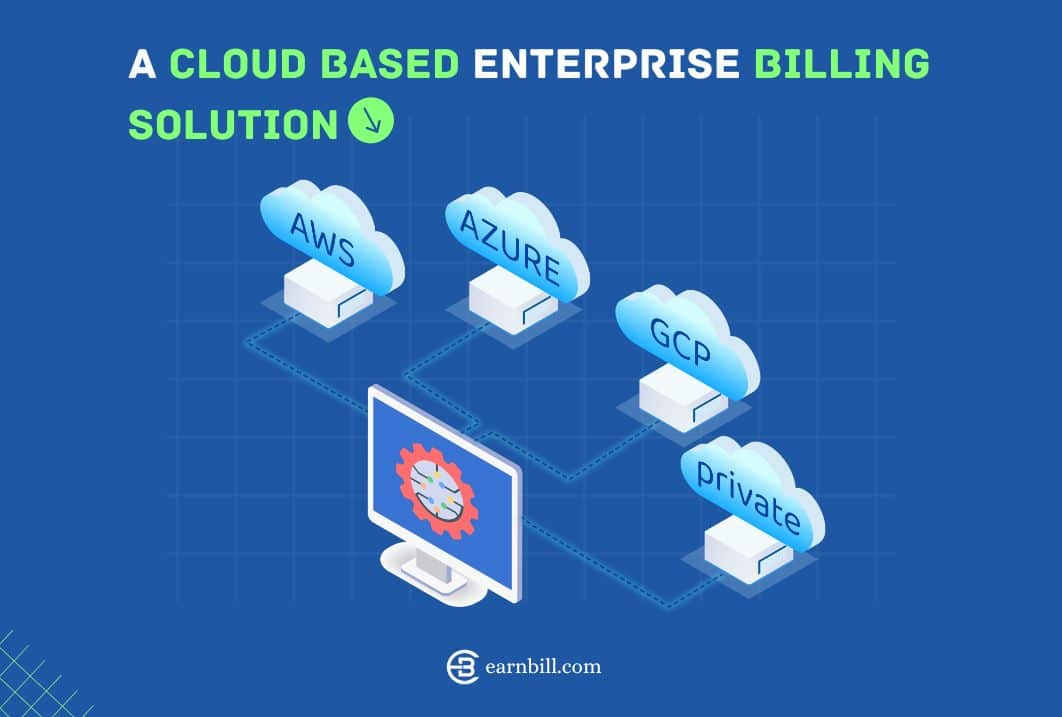
A cloud based enterprise billing system could be implemented on various public cloud platforms such as the AWS, the Azure or the Google Cloud Platform. There are some other cloud platforms as well, however these 3 are the most popular and well known platforms. In implementing a cloud-based enterprise billing system, it is required that the deployment architecture has been designed to make the best use of the available services from the chosen cloud platform.
For deploying a cloud-based enterprise billing system, you need to evaluate your options and make a choice of the cloud platform first. The choice of the cloud platform could be decided based on various factors such as:
The direction of the organisation in terms of the choice of its technology
Organisation's technology platform an open source based or Microsoft based? The choice of the technology made by the organisation could directly affect the choice of the cloud platform.
Data privacy concerns
Businesses could have challenges in sharing data on hosted cloud platforms. This could be because a certain cloud platform could also be a business competitor in another domain.
Nature of business
If your organisation itself is a cloud service provider, it would not like to host your billing system on another cloud platform.
- Another example of the nature of business affecting the choice of platform is prepaid billing systems requiring either real time verification of prepaid balance from the billing system.
- Now, if the internet connectivity is not that great in your region or country, then every call usage or data usage request would require an additional 1 to 2 seconds lag in verification of the prepaid balance, thereby affecting the service.
- Therefore, a private cloud or an on premise deployment could be a better choice for such a scenario because your private cloud will be closer to your network and directly connected to it (and will not cause lag caused by the Internet).
Contract with a Cloud Provider
The cloud platform will provide discounted costs for a certain number of committed resources in a year. The midsized to large size organisations can take advantage of this option and work out a good deal with the cloud provider and reduce the recurring infrastructure costs to a great extent.
Relying on your enterprise billing partner
The choice of the cloud platform for the enterprise billing system could simply not matter for some businesses. They could completely rely on their billing system partner to make that choice and provide the end-to-end hosted solution and related service. EarnBill definitely provides a good option in this regard.
Enterprise Billing on Public Cloud – The Implementation Strategy
Having looked at how the choice of cloud platform is made, let us look at what it takes to implement the enterprise billing on public cloud once your organisation has made a choice.
Factors that evolve your Cloud Implementation Strategy
First, let us look at all the factors that will decide and evolve your Cloud Implementation Strategy.
Deployment Architecture
The first step to deploy your enterprise billing system involves working on the deployment architecture. You need a detailed deployment architecture diagram.
Containerised Deployment
You may have a Dockerised Deployment or may decide to use a Kubernetes Cluster. This is very much a part of your deployment design and architecture. The containerised deployment makes it easy and convenient for your deployment to be working consistently in any environment.
This means that you won't need to install and configure each and every service, databases, programming runtimes, web server, application server, vendors or any external dependencies. Your system runs as a containerised application package that uses all required dependencies from within the container. A containerised deployment is one of the best practices in DevOps and should be evaluated for use in your enterprise billing platform.
A DevOps Strategy
You also need to tie up your CI/CD pipeline with how your application and services are deployed on cloud. Your choice of your CI/CD pipeline will depend on the technology you are using. There are good CI/CD tools such as Jenkins, Circle, CircleCI, Bamboo and more.
As part of your DevOps strategy, try to automate more and more and get those builds and releases rolled out to your test and pre-production environments as smoothly as possible, and without any manual intervention. You do need some gates when deploying your releases and changes to your Production systems.
High Availability
An enterprise billing solution needs to be highly available. Check which are the components that need a 100% up-time guarantee. Especially in the deployment architecture, there is a published node or a service for each component that is critical for the system to run on time.
Make use of cloud based load balancer service like Amazon Load Balancer on AWS3 to distribute the transaction load on multiple nodes. If you are using Kubernetes Cluster, it will automatically spawn more nodes and ensure high availability through the ingress.
Scaling
An enterprise billing system needs to scale up or down depending on the changing load requirements. Implementing horizontal and dynamic scaling through cloud based services is convenient. Cloud platforms such as AWS provide dynamic scaling options through configuration. This ensures that you design your deployments for peak loads and the system performs at optimal level at all times.
Disaster Recovery
A cloud-based enterprise billing solution may require a disaster recovery set up. This is more often seen in industries such as telecom (although such a set up can be seen in other industries as well). It is convenient to have a DR set up deployed in a completely different cloud region so that if one region goes down from the cloud service provider, there are greater chances to recover from the system failure and more quickly.
Your team should define, test and benchmark the RTO (Recovery Time Objective) and RPO (Recovery Point Objective) for such system failures. Look at all the options provided by the cloud platform that can help set up the disaster recovery option for your enterprise billing site.
Security and Encryption
The cloud platforms provide powerful security and data encryption features that you can take into account while planning the deployment of enterprise billing on the public cloud. You need to ensure that all data flows are protected by encryption and data storage such as disk storage devices and databases are also encrypted.
Mapping your Software and Services to Cloud-based Resources and Services
If you have looked at all the above aspects that decide and evolve your Cloud Implementation Strategy, also your deployment architecture is worked out with the list of software components, the next step is to decide on the services you would choose from the cloud platform. Look at the various supporting software that the system needs.
For example, you would need a private network (VPC), an application system image to be used on all the VMs, a relational database service, a load balancing service, any hosting web servers or application servers, possibly a nosql database, a messaging queue and perhaps more such services and software components.
Carry out a deep technical analysis of various services offered by the chosen cloud platform. Typically, this work would be done by your Software Infrastructure and Technical Architect. This is a challenging scenario. You need expertise in all the cloud platforms, you may also do a deep expertise into the enterprise billing platform and how it makes use of the technology. (This is where EarnBill could make things easier for you).
The end result of the technical analysis should be a mapping between the services and software components from your enterprise billing platform on one side and the services provided from the cloud platform on the other side. For example, your System may be requiring a postgres relational database cluster to be set up for meeting the high availability requirement. On the AWS cloud platform, you could simply decide to use the RDS service which inherently caters for the high availability and you won't need to set up a postgres cluster explicitly.
Once a full mapping of all services is ready, you need to put your DevOps/CloudOps teams to work and build the entire deployment on cloud. The entire deployment on cloud can be automated through technologies such as Terraform and Ansible. The cloud based deployment then needs thorough rounds of testing and certification effort to pass them production ready deployments.
What is different with Enterprise Billing on Private Cloud?
The enterprise billing on private cloud is typically used in specific cases where the public cloud platform is unavailable (for example some countries do not have public cloud offerings). A cloud platform such as OpenStack gets used to set up a private cloud environment on a company's in-house servers.
A private cloud system such as OpenStack is not so much different from let's say a public cloud system like AWS. It is an open source system. It carries various cloud based services which can be selected in a similar fashion as services would be selected from a public cloud platform through the mapping exercise explained above.
Once all the private cloud services are finalised, an actual deployment needs to be made, tested and verified for production use (just like the public cloud).
Conclusion
Implementing enterprise billing on public cloud or on private cloud requires a deep analysis of various aspects covered in this blog. It is a non-trivial exercise that requires a lot of expertise into the cloud platform, technical architecture and the functional understanding of the enterprise billing platform.
The EarnBill has been implemented on public and private clouds and its deployment architecture is both scalable and highly available. It is a time tested platform with its implementations working really well on cloud-based deployments.
Key Takeaways:
Ready to Deploy Your Cloud Billing Solution?
Let EarnBill's experts help you design and implement a scalable, highly available cloud-based billing platform